





A leading UK supplier of Cable Handling, Height Safety, Hoisting, Materials Handling, Mechanical Handling, Pulling, Securing & Winching Equipment - Established in 2014 with over 30,000 customers served

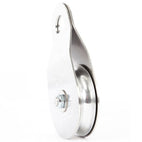


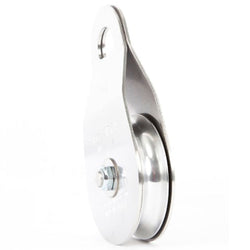
Single Swing Side Pulley Sheave 76mm (Snatch Block for 10mm Rope)
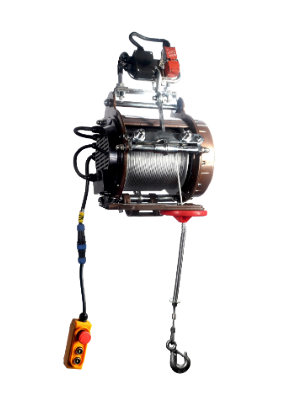
Portable Winch SKU: 167-14-3
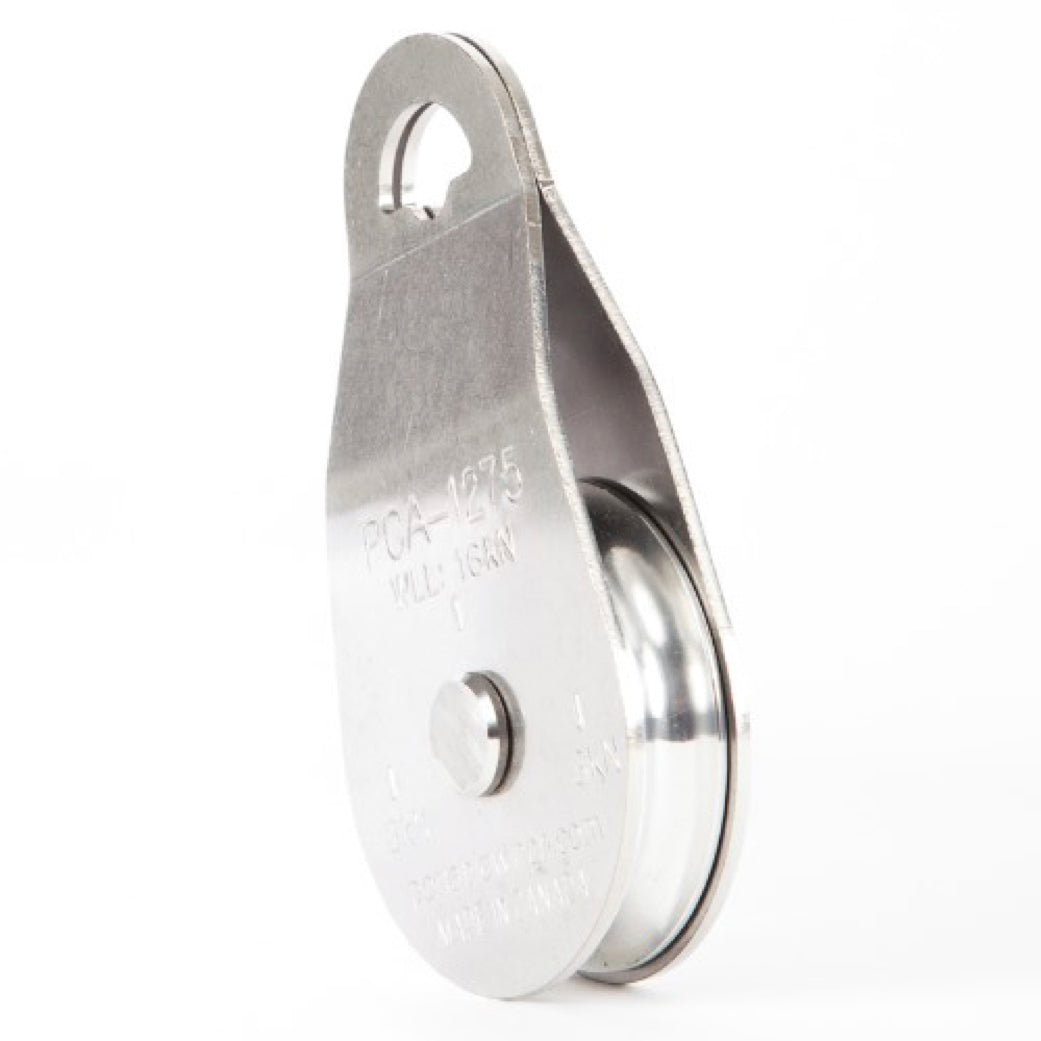
Stainless Steel Single Swing Side Pulley Sheave 76mm (Snatch Block) features a lightweight 76 mm diameter deep groove aluminium sheave, with stainless steel plates that swing open to install rope. Sintered bronze bushing on stainless steel shaft provides 98% efficiency. Particularly useful for use when doubling the line, the rope cannot accidentally come out of the block. Also very useful to redirect a load or to pull upward in a hill. Use the steel locking carabiners to anchor to a polyester sling. Read More
Regular price
£80.34
Regular price
Sale
Sale price
TODAY'S PRICE
£80.34
Unit price
per
In stock (2)
StockTax included.
Shipping calculated at checkout.
Need More?

Require more stock than shown as available, please send us your requirements via email sales@rigginguk.co.uk
Need Help?

If you're unable to locate the specific item you're searching for, please send us your requirements via email sales@rigginguk.co.uk
Description
Description
Stainless Steel Single Swing Side Pulley Sheave 76mm (Snatch Block)
This stainless steel swing side snatch block features a lightweight 76 mm diameter deep groove aluminium sheave, with stainless steel plates that swing open to install rope. Sintered bronze bushing on stainless steel shaft provides 98% efficiency.
Particularly useful for use when doubling the line, the rope cannot accidentally come out of the block. Also very useful to redirect a load or to pull upward in a hill. Use the steel locking carabiners to anchor to a polyester sling. Smaller and lighter than the PCA-1274 (SKU 167-14-2) pulley.
Ideal rope diameter: 10 mm.
Manufactured in Canada.
Specification
- Minimum Breaking Load (metric) : 60 kN (6125 kg)
- Working Load Limit (metric) : N/A
- Material : Sides: Stainless steel. Sheave: Aluminium
Weight and Dimensions
- Weight (metric) : 0,69 kg
- Diameter (metric) : 76 mm
- Length (metric) : 17 cm
- Width (metric) : 11 cm
- Height (metric) : 11 cm
Rope Specification
- Minimum diameter (metric) : 6 mm
- Maximum diameter (metric) : 10 mm
Additional Information
- Not designed for steel cable.
- The NEWTON is the International System unit for force; it is equal to the amount of net force required to accelerate a mass of one kilogram at a rate of one meter per second squared.
The WORKING LOAD LIMIT (WLL) is the maximum load which should not be exceeded under any condition.
The MINIMUM BREAKING STRENGTH (MBS) is observed during a destructive test. You should divide it by an appropriate safety factor.
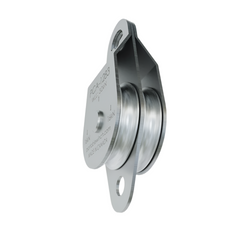
Double Swing Side Pulley Sheave 76mm (Snatch Block for 10mm Rope)
Regular price
From £123.60
Regular price
Sale price
£123.60
Unit price
per
Single Swing Side Pulley Sheave 100mm
Regular price
From £111.24
Regular price
Sale price
£111.24
Unit price
per
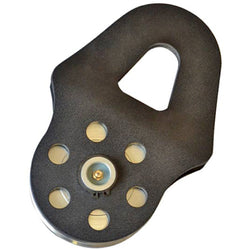
Warrior Pulley Block - 12000Lbs Swing Away with Grease Nipple
Regular price
From £22.25
Regular price
Sale price
£22.25
Unit price
per
Sold out
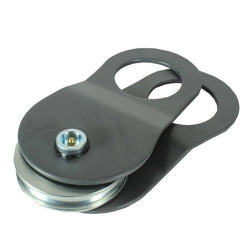
Warrior 8t Swing Away Pulley Block - up to 14mm Dia Cable
Regular price
From £27.80
Regular price
Sale price
£27.80
Unit price
per
Sold out
Double Swing Side Pulley Sheave 100mm
Regular price
From £185.40
Regular price
Sale price
£185.40
Unit price
per